Nagios (Core / XI)
The classic host and service monitor: free Core, commercial XI.
What it is
Nagios is a long-standing monitoring system: a free Core engine and a commercial XI edition with an extended web UI. It checks host, service and resource availability and notifies on failures, and a large plugin ecosystem extends what it can watch.
Problems it solves
- You want a proven, scriptable availability monitor with a huge plugin library.
- A simple up/down and threshold alert model fits the team better than full observability.
How administrators use it
- Define hosts and services in config and reuse community plugins for checks.
- Wire notifications to email or chat with escalation.
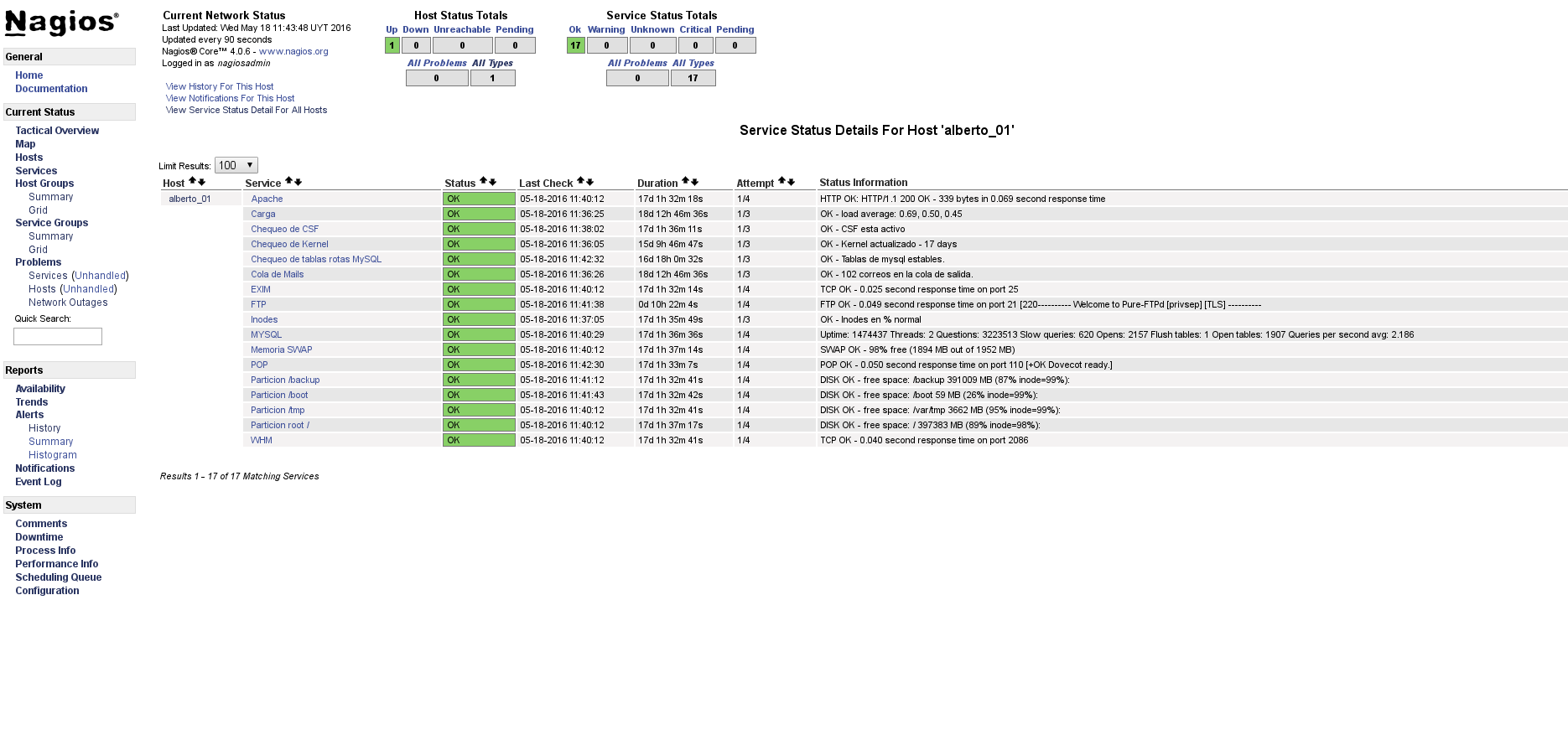
Strengths & trade-offs
Strengths
- Battle-tested and scriptable.
- Enormous plugin ecosystem.
- Free Core edition.
Trade-offs
- Config is text-file heavy.
- Dated UI on Core; polish is in paid XI.
Questions
What is the difference between Nagios Core and XI?
Core is the free, config-driven engine; XI is the commercial edition with a richer web UI, configuration tools and support.
Is Nagios still worth using?
Yes for straightforward availability monitoring with a huge plugin library, though newer tools offer slicker interfaces.
Alternatives
Open-source monitoring for servers, network gear, VMs and applications.
Time-series monitoring and alerting, the de-facto standard for cloud-native systems.
Sensor-based network and infrastructure monitoring from Paessler.